How the Declaration Paved the Way for Catholic Freedom in America
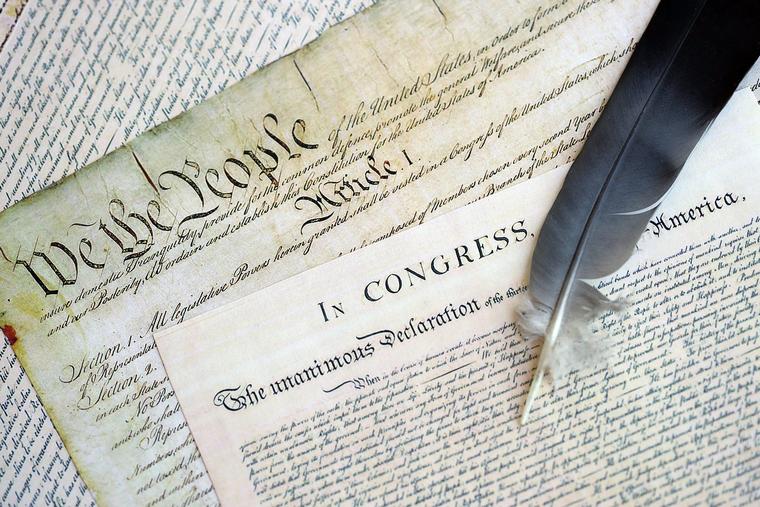
The Declaration of Independence and U.S. Constitution (photo: Mehaniq / Shutterstock)
Jerome C. Foss <www.ncregister.com/section/commentaries> CommentariesJuly 31, 2026
American Catholics have two good reasons to celebrate the 250th anniversary of the Declaration of Independence this year.
The first we share with all patriotic Americans and was best articulated by Abraham Lincoln at Gettysburg when he praised our nation for being “conceived in liberty and dedicated to the proposition that all men are created equal.”
We join our fellow citizens in our dedication to this great republic of liberty where the dignity of all people is honored in our principles and worked out, albeit too slowly at times, in practice.
The second reason is that the Declaration of Independence marked the beginning of the freedom to practice the Catholic faith in the English-speaking parts of North America. July 4 is not just Independence Day – it is also Catholic Freedom Day.
American Catholics have forgotten much of their history. They have forgotten that it was illegal to practice the Catholic faith in the original 13 colonies. Except for a Jesuit presence in Philadelphia, Catholic churches, monasteries and schools were nonexistent. There were no bishops teaching the faithful. What priests there were remained mostly hidden. They celebrated Mass in private homes and traveled great distances to administer the sacraments to a scattered faithful who were concentrated in Maryland and Pennsylvania, making up only 1% of the total colonial population at the dawn of the Revolution.
We tend to associate American religious liberty with the pilgrims who settled in New England in the 1620s. But these Puritans thought of liberty only for themselves. No region of colonial America was more anti-Catholic than New England, where priests could be punished simply for showing up. A 1647 Massachusetts law, for example, punished Catholic priests who dared to enter the colony. For the first offense, banishment; for the second, death.
Virtually all Catholics in colonial America were disenfranchised and barred from holding public office. They could not fully participate as coequal members of their local communities. Still, the economic opportunities of this new land may have drawn more Catholics had their immigration not been discouraged by requirements to take oaths that were deliberately phrased to make apostates of faithful Catholics. The message was clear: If you want to live in America, you had better acknowledge the King of England as your spiritual father.
For a time, Maryland appeared to be a haven for English-speaking Catholics. The Maryland Toleration Act of 1649 looked like a step in the right direction. It attempted to lay the legal groundwork for a cooperative public life between Catholics and Protestants. But the experiment was, unfortunately, short-lived. Within a few decades, the situation in Maryland became nearly as bad as any other English colony. And yet, because some Catholics did move to Maryland when things looked promising, a small but distinct Catholic life existed in the shadows. Those families who could afford to do so sent their sons to Catholic schools in Europe, where they received as good a formal education as could be found anywhere.
The Carrolls were such a family. They sent their sons to the College of Saint Omer, a Jesuit school in northern France that served English Catholics. Charles Carroll returned home from this prestigious school speaking multiple languages and familiar with the great ideas of civilization from ancient Greece to modern Europe.
As tensions grew between the colonies and England, Charles emerged as one of the leading lights from Maryland in the great political question of the day. In 1776, Maryland and the Continental Congress allowed him to serve as a voting delegate of the colony. The importance of a Catholic serving in a political capacity of this magnitude has been underemphasized in our retelling of the American Founding.
Carroll’s participation in the debates that led to the Declaration of Independence was momentous and set the tone of this new nation, “conceived in liberty,” where all men – including Catholics – really are equal.
Charles Carroll’s cousins John and Daniel also attended the College of Saint Omer. John joined the Jesuits. Though he planned to live out his life in Europe, Providence brought him back to Maryland just in time for the American Revolution. He would serve on a diplomatic mission to Canada alongside Benjamin Franklin, a man who had hitherto held a low opinion of Catholics. John did much to change Franklin’s mind. Later, as the first bishop in the United States, John would go on changing minds as he built up the Church.
Daniel Carroll, for his part, became a leading politician in Maryland and represented his state in 1787 at the Constitutional Convention. The document that emerged from that great assembly forbade those bigoted religious oaths previously used to keep Catholics out of politics. Daniel would later serve in Congress and help James Madison defend the language of what would become the First Amendment to the Constitution. By 1791, Catholic liberty was taken for granted under the law of the land, a dramatic change from the way of things prior to the Declaration of Independence.
All Americans should spend this year of the semiquincentennial celebrating our republic. American Catholics, however, have an additional reason to celebrate. The past 250 years have seen tremendous growth for the Church in America. We should be proud to join Charles Carroll in pledging our lives, fortunes and sacred honor to the political principles that have provided, “with a firm reliance on divine Providence,” fertile ground for the works of the Holy Spirit – the true spirit of 1776.
Jerome C. Foss is the assistant vice president of academic affairs and the Jack Miller Center scholar at Saint Vincent College in Latrobe, Pennsylvania.
www.ncregister.com/commentaries/foss-declaration-freedom
The Declaration of Independence and U.S. Constitution (photo: Mehaniq / Shutterstock)
Jerome C. Foss <www.ncregister.com/section/commentaries> CommentariesJuly 31, 2026
American Catholics have two good reasons to celebrate the 250th anniversary of the Declaration of Independence this year.
The first we share with all patriotic Americans and was best articulated by Abraham Lincoln at Gettysburg when he praised our nation for being “conceived in liberty and dedicated to the proposition that all men are created equal.”
We join our fellow citizens in our dedication to this great republic of liberty where the dignity of all people is honored in our principles and worked out, albeit too slowly at times, in practice.
The second reason is that the Declaration of Independence marked the beginning of the freedom to practice the Catholic faith in the English-speaking parts of North America. July 4 is not just Independence Day – it is also Catholic Freedom Day.
American Catholics have forgotten much of their history. They have forgotten that it was illegal to practice the Catholic faith in the original 13 colonies. Except for a Jesuit presence in Philadelphia, Catholic churches, monasteries and schools were nonexistent. There were no bishops teaching the faithful. What priests there were remained mostly hidden. They celebrated Mass in private homes and traveled great distances to administer the sacraments to a scattered faithful who were concentrated in Maryland and Pennsylvania, making up only 1% of the total colonial population at the dawn of the Revolution.
We tend to associate American religious liberty with the pilgrims who settled in New England in the 1620s. But these Puritans thought of liberty only for themselves. No region of colonial America was more anti-Catholic than New England, where priests could be punished simply for showing up. A 1647 Massachusetts law, for example, punished Catholic priests who dared to enter the colony. For the first offense, banishment; for the second, death.
Virtually all Catholics in colonial America were disenfranchised and barred from holding public office. They could not fully participate as coequal members of their local communities. Still, the economic opportunities of this new land may have drawn more Catholics had their immigration not been discouraged by requirements to take oaths that were deliberately phrased to make apostates of faithful Catholics. The message was clear: If you want to live in America, you had better acknowledge the King of England as your spiritual father.
For a time, Maryland appeared to be a haven for English-speaking Catholics. The Maryland Toleration Act of 1649 looked like a step in the right direction. It attempted to lay the legal groundwork for a cooperative public life between Catholics and Protestants. But the experiment was, unfortunately, short-lived. Within a few decades, the situation in Maryland became nearly as bad as any other English colony. And yet, because some Catholics did move to Maryland when things looked promising, a small but distinct Catholic life existed in the shadows. Those families who could afford to do so sent their sons to Catholic schools in Europe, where they received as good a formal education as could be found anywhere.
The Carrolls were such a family. They sent their sons to the College of Saint Omer, a Jesuit school in northern France that served English Catholics. Charles Carroll returned home from this prestigious school speaking multiple languages and familiar with the great ideas of civilization from ancient Greece to modern Europe.
As tensions grew between the colonies and England, Charles emerged as one of the leading lights from Maryland in the great political question of the day. In 1776, Maryland and the Continental Congress allowed him to serve as a voting delegate of the colony. The importance of a Catholic serving in a political capacity of this magnitude has been underemphasized in our retelling of the American Founding.
Carroll’s participation in the debates that led to the Declaration of Independence was momentous and set the tone of this new nation, “conceived in liberty,” where all men – including Catholics – really are equal.
Charles Carroll’s cousins John and Daniel also attended the College of Saint Omer. John joined the Jesuits. Though he planned to live out his life in Europe, Providence brought him back to Maryland just in time for the American Revolution. He would serve on a diplomatic mission to Canada alongside Benjamin Franklin, a man who had hitherto held a low opinion of Catholics. John did much to change Franklin’s mind. Later, as the first bishop in the United States, John would go on changing minds as he built up the Church.
Daniel Carroll, for his part, became a leading politician in Maryland and represented his state in 1787 at the Constitutional Convention. The document that emerged from that great assembly forbade those bigoted religious oaths previously used to keep Catholics out of politics. Daniel would later serve in Congress and help James Madison defend the language of what would become the First Amendment to the Constitution. By 1791, Catholic liberty was taken for granted under the law of the land, a dramatic change from the way of things prior to the Declaration of Independence.
All Americans should spend this year of the semiquincentennial celebrating our republic. American Catholics, however, have an additional reason to celebrate. The past 250 years have seen tremendous growth for the Church in America. We should be proud to join Charles Carroll in pledging our lives, fortunes and sacred honor to the political principles that have provided, “with a firm reliance on divine Providence,” fertile ground for the works of the Holy Spirit – the true spirit of 1776.
Jerome C. Foss is the assistant vice president of academic affairs and the Jack Miller Center scholar at Saint Vincent College in Latrobe, Pennsylvania.
www.ncregister.com/commentaries/foss-declaration-freedom